Monday, November 27, 2006

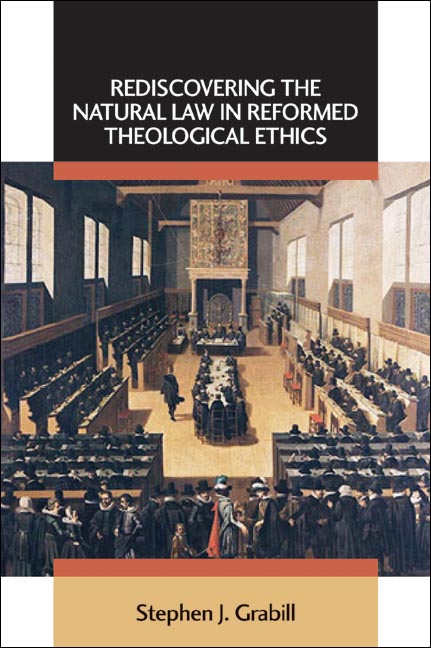
Book Review: Rediscovering the Natural Law in Reformed Theological Ethics


"I count it sufficient to have said that nothing may be found
in the world so abject or lowly that it gives no witness to God."

This quote by the Reformed theologian Peter Martyr Vermigli from his commentary on Romans sets the stage for the ambitious work of Stephen Grabill in "Rediscovering the Natural Law in Reformed Theological Ethics." Grabill, a research scholar in theology at the Acton Institute foe the Study of Religion and Liberty, attempts to do exactly what the title suggests. In his own words, "a hybrid of historical and theological resources" this book contributes to the growing discussion and interaction of scholars with the issue of natural law and its corresponding doctrinal and ethical concerns.

With a narrow focus on the Reformed perspective, Grabill makes the case that the 20th century's approach to the matter of natural law - the idea that God has written upon the heart of all men a common rule of right and wrong - is an unfortunate detour from what has been a fairly consistent understanding since the early middle ages.

Grabill points to the 1934 debate on Natural Revelation between Reformed theological giants Karl Barth and Emil Brunner, as the pooint where the common understanding when off the rails. Barth, a strong opponent of any concept of natural law won the day and his antipathy toward the subject colored much of the discussion of the topic until recently. Now Grabill says that there is a growing interest in natural law again by Reformed scholars who see it as a way to discourse in the increasingly hostile court of secularity.

His contribution is this heavy annotated volume which serves to return to the sources of the reformed tradition and show that contrary to Barthian colored study, in fact the great voices of the past stand in continuity with the historical perspective on natural law. With that in mind, Grabill mines the depths of four of the foremost thinkers of the Reformation - John Calvin, Peter Martyr Vermigli, Johannes Althusis and Francis Turretin.

It is here with the historical and theological resources that this book finds it value. While most are familiar with John Calvin, the rest of the writers are less familiar, but nonetheless important to the discussion. Grabill does a good job of distilling their perspectives and answering their critics. The large amount of annotations found at the end of the book demonstrate that Grabill has understood these men and their thought.

As a Reformed pastor, I found this book interesting, but wonder about its appeal to the general public. It is not an easy book and I would imagine most laypersons would be put off by it. however, it is a great resource for scholars wanting to examine the roots of the historical reformed stance on the matter of natural law. And while I would have liked Grabill to draw some practical applications from his study, he admits that that is not his goal, he will leave that to others who will build upon this study. In summary I would give it a 4 on a 1-5 scale, but mindful that this score is for scholars who have the most to gain from reading this book.



Sunday, November 26, 2006

Hello, My Name Is YHWH Shammah

Where is God? This question often asked in the face of terrible human suffering is one of the great stumbling blocks to faith. In this last message in the series on the names of God, we consider YHWH Shammah - the Ever-Present God. Where is God - in Creation, the Covenant, in Christ, in the Church, in Christians and in the coming Consumation.


MP3 File

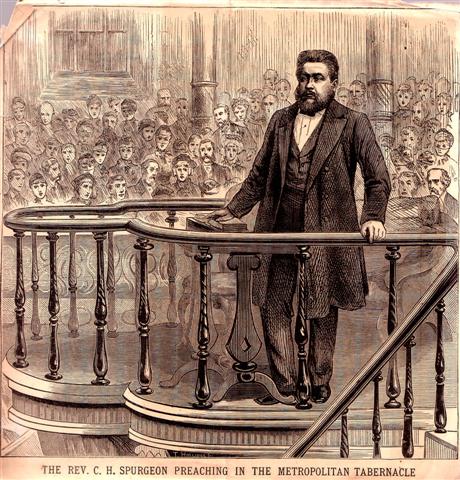
Sunday Spurgeon


“Am I my brother’s keeper?” was the language of Cain. Cain has many children even at this day. You are your brother’s keeper. If you have grace in your heart, you are called to do good to others. Take care lest your garments be stained and sprinkled with the blood of your fellow men. Mind, Christians, mind, lest that village in which you have found a quiet retreat from the cares of business, should rise up in judgment against you, to condemn you, because, having
means and opportunity, you use the village for rest, but never seek to do any good in it.

Take care, masters and mistresses, lest your servant’s souls be required of you at the Last Great Day. “I worked formy master, he paid me my wages, but he had no respect to his greater Master and never spoke to me, though he heard me swear and saw me going on in my sins.” Mind, I speak, Sirs, to some of you. I would I could thrust a thorn into the seatwhere you are now sitting and make you spring for a moment to the dignity of a thought of your responsibilities.

Why, Sirs, what has God made you for? What has He sent you here for? Did He make stars that should not shine and suns that should give no light and moons that should not cheer the darkness? Has He made rivers that shall not be filled with water and mountains that shall not stay the clouds? Has He made even the forests which shall not give a habitation to the birds? Or has He made the prairie which shall not feed the wild flocks? And has He made you for nothing?

Why, Man, the nettle in the corner of the Churchyard has its uses and the spider on the wall serves her Maker. And you, a man in the image of God, a blood-bought man—a man who is in the path and track to Heaven, a man regenerated, twice created—are you made for nothing at all but to buy and to sell, to eat and to drink, to wake and to sleep, to laugh and to weep, to live to yourself? Small is that man who holds himself within his ribs. Little is that man’s
soul who lives within himself.

    Thursday, November 23, 2006

    Monday, November 20, 2006

    Hello, My Name Is...YHWH Shalom


    Conflict and resolution are the keys to a good story. Three conflicts and one resolution form the heart of Judges 6:1-24 which tells the story of Gideon and his encounter with YHWH Shalom - the God of Peace. Things haven't changed much since that time, so how do we find God's peace to face the struggles of life.


    MP3 File

    Thursday, November 16, 2006

    Uprooting The Emergent "Flower"


    Steve Camp over at CampOnThis has a insightful take upon the TULIP of the emerging church...

    1. Total Ambiguity

    Methodology over message
    Truth is abstract; fluid, and liquid
    Conversation over gospel proclamation
    Ecumenism over doctrinal unity
    Contantly inventing a new spiritual meta-narrative

    2. Unconditional Pragmaticism

    Seeker sensible and seeker sensitive
    Whatever works—do it
    Numbers justify everything
    Program enriched
    Felt need, culture-driven

    3. Limited Theology

    Doctrine diminished and not primary; it is the afterthought
    Truth claims remain vague and undefined
    No definitive agreed upon statement of faith
    Very little biblical definition of ministry
    Recommended reading lists of their networks remain liberal and pragmatic

    4. Irresistible Contextualization

    Truth must be adapted to and defined by culture
    The audience, not the message, is sovereign
    The focus is to be relevant and relativistic
    Being missional is marked by methodological inroads, conversation, and cultural discernment of the times - not the proclamation of the gospel
    Speak of the humanity of Christ in crude terms to make Jesus relatable over reverence of the transcendence of Christ

    5. Postmodern Perverse Speech

    Being known as the cussing pastor is good
    Unwholesome talk is cultural not biblical
    Coarse scatological speech is a matter of personal taste
    It makes you cool to other Emerging/Emergents
    If you challenge it, you are labeled as Victorian and out of date

    If you want to know about the true TULIP check out this site.

      Wednesday, November 15, 2006

      Got God?


      People who really want something always give some evidence of that fact. People who really desire something with the whole of their being do not sit down, passively waiting for it to come. And that applies to us in this matter.... The person who is truly hungering and thirsting after righteousness obviously avoids everything that is opposed to such a righteousness. I cannot obtain it myself, but I can refrain from doing things that are obviously opposed to it. I can never make myself like Jesus Christ, but I can stop walking in the gutters of life. That is a part of hungering and thirsting.

      Let us subdivide that. There are certain things in this life that are patently opposed to God and His righteousness. There is no question about that at all. We know they are bad; we know they are harmful; we know they are sinful. I say that to hunger and thirst after righteousness means avoiding such things just as we would avoid the very plague itself. If we know there is an infection in a house, we avoid that house. We segregate the patient who has a fever, because it is infectious, and obviously we avoid such persons. The same is equally true in the spiritual realm.

      But it does not stop at that. I suggest that if we are truly hungering and thirsting after righteousness we shall not only avoid things that we know to be bad or harmful, we shall even avoid things that tend to dull or take the edge off our spiritual appetites. There are so many things like that, things that are quite harmless in themselves and which are perfectly legitimate. Yet if you find that you are spending too much of your time with them, and that you desire the things of God less, you must avoid them.... I think it is a commonsense argument.

      D. Martyn Lloyd Jones: Studies in the Sermon on the Mount, i, pp. 89-90

        Do You Really Want To Go To Heaven?


        “If your heart takes more pleasure in reading novels, or watching TV, or going to the movies, or talking to friends, rather than just sitting alone with God and embracing Him, sharing His cares and His burdens, weeping and rejoicing with Him, then how are you going to handle forever and ever in His presence...?
        You'd be bored to tears in heaven,
        if you're not ecstatic about God now!”


        - Keith Green

        Monday, November 13, 2006

        The Razor's Edge


        From The Allen Report:

        "The Republican National Committee has been pointing out that a small shift in votes would have made a big difference. A shift of 77,611 votes would have given Republicans control of the House, according to Bush's political team. And a shift of 2,847 votes in Montana, or 7,217 votes in Virginia, or 41,537 votes in Missouri would have given a Republicans control of the Senate. In addition, the party has calculated that the winner received 51 percent or less in 35 contests, and that 23 races were decided by two percentage points or fewer, 18 races were decided by fewer than 5,000 votes, 15 races were decided by fewer than 4,000 votes, 10 races were decided by fewer than 3,000 votes, eight were decided by fewer than 2,000 votes and five races were decided by fewer than 1,000 votes."

          Sunday, November 12, 2006

          Sunday Spurgeon


          "I am the vine; you are the branches.
          If a man remains in me and I in him, he will bear much fruit;
          apart from me you can do nothing."

          - John 15:5

          You can do nothing, not only is the higher duty beyond your power, but the lesser duty, too. You are not capable of performing the lowest act of the Divine life, except as you receive strength from God the Holy Spirit. And surely, my Brethren, it is generally in these little things that we find out most of all our weaknesses. Peter can walk the waves of the sea, but he cannot bear the jest of a little maid. Job can endure the loss of all things, but the upbraiding words of his false
          friends, though they are but words and break no bones—make him speak far more bitterly than all the sore boils and pains which were in his very skin.

          Jonah said he did well to be angry, even unto death, about a gourd. Have you not often heard that mighty men who have outlived hundreds of battles have been slain at last by the most trivial accident? And has it not been so with professed Christians? They stood uprightly in the midst of the greatest trials—they have outlived the most arduous struggles and yet, in an evil hour, trusting to themselves, their foot has slipped under some slight temptation, or because
          of some small difficulty. John Newton says—“The Grace of God is as necessary to create a right temper in Christians on the breaking of a china plate as on the death of an only son.”

          These little leaks need the most careful stopping. The plague of flies is no more easy to be stayed than that of the destroying angel. In little, as well as in great things, the just must live by faith. In trifles as well as in nobler exercises the Believer should be conscious of his own inability—should never say of any act, “Now I am strong enough to perform this. I need not go to God in prayer about this. This is so little a thing, it is beneath the dignity of God and I am quite sufficient for it of myself.” No, Believer, you are sufficient for nothing at all. Without Christ you can do nothing that is good, nothing that is right.

            Friday, November 10, 2006

            Does Everyone Mean Everyone? A Defense of The Doctrine of Election from 2 Peter 3:9

            One of the verses that causes many people to doubt the Reformed Doctrine of Election is 2 Peter 3:9, "The Lord is not slow in keeping his promise, as some understand slowness. He is patient with you, not wanting anyone to perish, but everyone to come to repentance."

            The following video shows the importance of context and that careful reading of the text will in fact defend the Reformed position. View it with an open mind.


            HT: Old Truth

              Ryle is Right On!


              Mark what I say. If you want to do good in these times, you must throw aside indecision, and take up a distinct, sharply cut, doctrinal religion. If you believe little, those to whom you try to do good will believe nothing.

              The victories of Christianity, wherever they have been won, have been won by distinct doctrinal theology, by telling men roundly of Christ’s vicarious death and sacrifice, by showing them Christ’s substitution on the cross and His precious blood, by teaching them justification by faith and bidding them believe on a crucified Savior, by preaching ruin by sin, redemption by Christ, regeneration by the Spirit, by lifting up the bronze serpent, by telling men to look and live, to believe, repent and be converted. This, this is the only teaching which for eighteen centuries God has honored with success, and is honoring at the present day both at home and abroad.

              Let the clever advocates of a broad and undogmatic theology—the preachers of the gospel of earnestness and sincerity and cold morality—let them, I say, show us at this day any English village or parish or city or town or district, which has been evangelized without "dogma," by their principles. They cannot do it, and they never will. Christianity without distinct doctrine is a powerless thing. It may be beautiful to some minds, but it is childless and barren.

              There is no getting over facts. The good that is done in the earth may be comparatively small. Evil may abound and ignorant impatience may murmur, and cry out that Christianity has failed. But, depend on it, if we want to "do good" and shake the world, we must fight with the old apostolic weapons, and stick to "dogma". No dogma, no fruits! No positive evangelical doctrine, no evangelization!

              The whole piece by J.C. Ryle, The Needs of the Times, is a convicting must read. You can find it here.

              HT: Slice of Laodicea

                Thursday, November 09, 2006

                Will It Blend?


                This blender is amazing. It shreds marbles, full cans of coke and much more. Check out more great videos here.

                  Tuesday, November 07, 2006

                  The Gospel According To Jack Bauer?

                  Regular readers of this blog, all 12 of you, know that I am a big fan of the Fox series "24" which returns in January. Click to view the promo video and pay special attention to the theme of sacrifice.


                  Mark Driscoll (Mars Hill Church - Seattle) offers an insightful commentary upon the hunger of the culture for the deep things of theology, even when they cannot articulate the doctrines.Here is a bit of his blog post on the subject of Jack Bauer and Penal Substitutionary Atonement.
                  Curiously, some people on the more left-leaning side of our dysfunctional Christian family are backing away from the doctrine of penal substitutionary atonement. Those in the more established liberal churches along with their emergent offspring are routinely decrying the concept that Jesus paid the penalty for our sin (death) in our place on the cross. They say it is too gory, too scary, too bloody, too masculine, and too violent. Furthermore, they say that in our tender little world of kindness such teachings won’t help further the kingdom of meek and mild Jesus.

                  However, the culture seems to have an insatiable appetite for the doctrine.

                  First there was the smash hit The Chronicles of Narnia. Since you probably saw the movie, you will remember that Aslan was a type of Jesus Christ who laid down his life for his friends only to resurrect as the king. Sitting in the theater, it was encouraging to hear people choke up when Aslan died and I wondered why they would not also find the death of Jesus for their sins at least as emotionally compelling.

                  Furthermore, the sixth season of the greatest television show in the history of the world (just ahead of Dog the Bounty Hunter and Ultimate Fighting) is back in January. That show? 24, of course. The trailer for the upcoming season has been released.

                  How in the world can we drop the doctrine of penal substitutionary atonement when the big movies and the big television shows are under God’s sovereign hand serving as reformed theological illustrations? Next thing you know Bauer will start reading the Puritans to help solidify his courage to lay down his life for many and grow a little beard in tribute to Charles Haddon Spurgeon.
                  I'm becoming a bigger fan of Driscoll (not just because he is a fan of "24", like myself) but because he seems to have a keen eye on the things of God bubbling just below the surface of the culture.
                  I agree with him that we are in danger of downplaying our Reformed doctrine just when there appears to be a growing audience. (See Christianity Today's article on "Young, Restless and Reformed")

                  The Apostle Paul was not adverse to using the cultural language of those he was trying to reach, we should be open to finding such points of connection with people today as well. Not that we should baptism everything in culture, for there is much that is harmful; but we should not retreat into a monastic shell and refuse to engage people where they are. Being in the world, but not of it, doesn't mean we shouldn't know that Madonna, Brad Pitt and Jack Bauer are about.

                    Sunday, November 05, 2006

                    Sunday Spurgeon

                    And oh how often do you forget His Presence, too! In the midst of a crowd, you are conscious every one of you, of the presence of man, but perhaps this very moment you are ignoring the fact that God is here. In your shop on the morrow how carefully you will take heed that your conduct is circumspect if the eye of your fellow man is observant of you. But before the Presence of God, with the Eternal eye upon you, you can presume to practice the paltry tricks of trade, or to do that which you would not have revealed to mortals for all the world.

                    You are careful to shut the door and draw the curtain and hide yourselves in secret from men—strangely forgetting that when the curtain is drawn and the door is shut, God is there, still. No walls can shut Him out. No darkness can conceal the deed from His eyes. He is everywhere and sees us in all things. Why, my Hearers, we are all guilty in this respect, in a measure. We forget the actual Presence and the overlooking eyes of God. We talk as we dare not talk if we were thinking that He heard us. We act as we would not act if we were conscious that God was there. We indulge in thoughts which we should cast out if we could but bear in perpetual remembrance the abiding Presence of God, the Judge of the whole earth.

                    Forgetting God is so common a sin that the Believer, himself, needs to repent of it and ask to have it forgiven, while the unbeliever may solemnly confess this to be his crying sin, a piece of guilt in respect to which he dare not profess innocence—God is not in all, perhaps not in any of your thoughts.

                      Friday, November 03, 2006

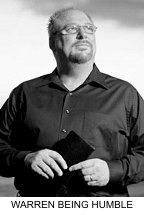
                      WARREN UNVEILS THE R.I.C.K. PLAN ON HUMILITY

                      From the SACRED SANDWICH:

                      NOVEMBER 2006
                      --- Pastor Rick Warren, well-known for creating memorable acrostics to convey his groundbreaking church initiatives like PEACE, SHAPE, and CHURCH, has unveiled his latest teaching on Christian humility called the RICK plan. Says Warren, “As Christians who have received greater spiritual insight than other religions, we can easily fall into the trap of acting superior. But Jesus said we need to humbly serve others without concern for our preeminence or recognition in the world, and that’s what my new RICK plan is all about.”

                      RICK stands for: Remember others first; Imitate Christ; Create opportunities for service; and Keep your ego in check.

                      Warren believes his new strategy is essential for the success of the Church and plans to implement it throughout his Purpose Driven network until RICK covers the globe. “I’ve come to realize how important humility is, and I want other Christians to understand it, too,” Warren explained. “In fact, just the other day I was talking to Bono about my recent visit with President Bush when all of a sudden Rupert Murdoch and Bill Gates called me up to ask for pastoral advice. This is the kind of humbling servant experience that I hope to convey to others.”

                      When asked about critics who charge that his new global humility plan is just a veiled marketing campaign to force his personal agenda on the Church, Warren responded, “Hey, the RICK plan isn’t about me.”

                      The Heavens Declare The Glory of God!


                      Here are just a few of the top 100 photos taken by the Hubble Space Telescope.
                      The rest can found here.


                      Bishop Bloopers?

                      Bishop Katharine Jefferts-Schori, the first female presiding bishop of the Episcopal Church, doesn't consider Jesus Christ as the only way to God, reports the Associated Press. "If we insist that we know the one way to God, we've put God in a very small box," said Jefferts-Schori. While the Bible declares that "in Christ, all the fullness of the Deity lives in bodily form" (Colossians 2:9), Schori doesn't believe that "one person can have the fullness of truth in him or herself." Instead, she says, "Truth is, like God, more than any one person can encompass."

                        The Word of God Will Find A Way

                        From today's Extreme Devotion:

                        “Bible verses remain true, even if the devil quotes them.”

                        Originally, the idea was to ridicule the Christian Bible, to make such a mockery of it that no self-respecting person would believe it. To carry out the plan, millions of books were printed, including The Comical Bible and The Bible for Believers and Unbelievers.

                        The books made fun of Jesus, called into question his miracles, and ridiculed other aspects of the Christian faith. But the criticisms were so outrageous that no one took them seriously. Countless verses of Scripture were inserted into the text as “proof” in the Communists’ minds of the fallacy of the book.

                        Members of the underground church snatched up copies of these “comic” books as fast as they were printed. The verses that were quoted in the books were a smorgasbord of delights to those who were spiritually famished. And all of it was legal, printed by their own God-hating government. Just as the ravens fed Elijah when he was hungry, so God used government printing houses to feed his starving children in Communist nations.

                        The publishers were delighted to receive thousands of letters asking for reprints of the books. They quickly rolled the presses to print more copies. Little did they know those letters came from believers who wished to distribute the precious books full of God’s words to other underground church members.

                        Thursday, November 02, 2006

                        NT Silence On Abortion?


                        Kairos Journal has a great piece on the apparent silence of the New Testament on the issue of abortion.
                        Christians who oppose abortion on demand are frequently taunted by their challengers with the observation that the New Testament is silent about abortion. Why did Jesus not speak about the subject? Why is there no clear prohibition against abortion in Paul’s writings? Nowhere in the biblical text does one find a “thou shalt not abort.” Is this evidence that the Bible has nothing to say about the topic?

                        In his essay, “Why Is the New Testament Silent about Abortion?” New Testament professor Michael Gorman helpfully points out that the fact that the New Testament is silent about an issue is not evidence that early Christians did not have a settled position on the matter. In fact, quite the opposite.

                        That the New Testament never directly addresses abortion (or exposure or infanticide) does not mean that the first-century churches were ignorant of this practice or that they believed it to be a matter of “individual conscience.” On the contrary, the silence simply tells us that abortion was not an issue in need of resolution. The silence indicates that there was little or no deviation from Judaism.

                        In addition to what the Old Testament says about the sanctity of human life and about abortion itself, the extra-canonical Jewish literature is clear on the topic. The Jewish wisdom literature, Sentences of Pseudo-Phocylides (c. 50 B.C.-50 A.D.), directs that “a woman should not destroy the unborn in her belly, nor after its birth throw it before the dogs and vultures as a prey.” Included among the “wicked” in the apocalyptic Sibylline Oracles were women who “produce abortions and unlawfully cast their offspring away” and sorcerers who dispense abortion-causing drugs. Similarly, the apocryphal book 1 Enoch (first or second-century B.C.) declares that an evil angel taught humans how to “smash the embryo in the womb.” Finally, the Jewish historian, Josephus, maintained that “The Law orders all offspring to be brought up, and forbids women either to cause abortion or to make away with the fetus.” Observes Gorman, “No contradictory early Jewish texts . . . have been discovered, thus suggesting that a Jewish anti-abortion consensus did exist in the first century.”

                        Similarly, the non-canonical literature of the early Church reveals an amazing consensus. The teaching of the early church in the Didache (50-120 A.D.), for instance, was uncompromising: “Love your neighbor as yourself . . . You shall not murder a child by abortion nor shall you kill a newborn.” The Epistle of Barnabas (80-120 A.D.) commands the Christian: “You shall love your neighbor more than your own life. You shall not murder a child by abortion nor shall you kill a newborn.” Lastly, in the Apocalypse of Peter (100-150 A.D.), the author declares: [In a vision of hell] I saw . . . women . . . who produced children out of wedlock and who procured abortions.”

                        Granted, these books were not received into the New Testament canon. But they do reveal accurately the mind-set and attitudes of the early Christian community. In fact, the historian Eusebius notes that these books were “publicly read by many in most churches.” Furthermore, that these prohibitions against abortion are rooted in the doctrine of neighbor love indicates that early Christians viewed the unborn as members of the community worthy of love and protection.

                        So, in a real sense, the New Testament’s silence on abortion shouts like a megaphone. From the birth of the Church and throughout her first several centuries, no serious Christian found abortion to be an acceptable practice. Perhaps it is time for Christians to return to their historical roots.

                          Wednesday, November 01, 2006

                          Read and Repent


                          "What a man is alone on his knees before God,
                          that he is, and no more".

                          -Robert Murray M'Cheyne

                          "I believe that prayer is the measure of the man, spiritually, in a way that nothing else is, so that how we pray is as important a question as we can ever face"
                          - J.I. Packer