
How come people want to take the God out of Easter but no one wants to take the Satan out of Halloween? - Jay Leno








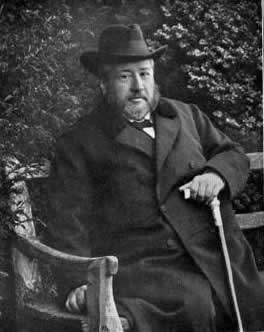 Men of the world are apt to say, “You are such a set of bigots; you think everybody wrong but yourselves.” Is it wonderful that if we think we are right, we do not believe that those who are opposed to us can be right also?

 I bind unto myself to-day
"“I regularly read the blogs of my favorite communicators from influential churches around the United States. Without mentioning their names in this article, they are young guys who are well-known to everyone reading this piece. They are all authors. They all have very large churches. Each of these pastors has recently come out on their blogging sites and admitted, curiously, the same thing. They get approximately 70 percent of their messages each week from other people -– word for word according to them. They fill in their own personal illustrations and stories, of course. Two of the guys that I am thinking of as I write this have churches of more than 10,000 in attendance each weekend."He then goes on to defend the practice and offers this "“helpful"” advice:
"“First of all, stop all of this nonsense of spending 25 or 30 hours a week preparing to speak on the weekend. The guys I draw encouragement from -– the best communicators in the United States -– confess they spend a total of about 15 hours preparing for their message. As I have already said, they get 70 percent of their material from someone else. Remember, Solomon wrote that "there is nothing new under the sun ..."
Borrow creatively from others in the Church world. Some are easier to relate to than others. The one guy who is the most borrowed from in the United States is, no doubt, Rick Warren. Warren's famous line is "If my bullet fits your gun, then shoot it!" By the way, who does Warren borrow from? He says that he listens to three or so preaching tapes a day! So who knows where he gets his stuff!
Let's forget about originality -– which is often a form of pride. Let's begin to focus on effectiveness, and pray that we will be powerful at connecting with not-yet believers."”






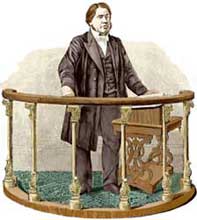 Reader, meet me in heaven! Do not go down to hell. There is no coming back again from that abode of misery. Why do you wish to enter the way of death when Heaven's gate is open before you? Do not refuse the free pardon, the full salvation which Jesus grants to all who trust Him. Do not hesitate and delay. You have had enough of resolving, come to action. Believe in Jesus now, with full and immediate decision. Take with you words and come unto your Lord this day, even this day. Remember, O soul, it may be now or never with you. Let it be now; it would be horrible that it should be never. Again I charge you, meet me in heaven.
 "Overcoming the widespread Christian belief that 'Jesus died for my sins seems an insurmountable challenge! Preachers, liturgical rites, hymns and religious education curricula continue to reinforce 'atonement theology/theories.'"..."Personally and pastorally, 'atonement' thinking creates a mire of destructive results and I, for one, would well appreciate your cogent analysis of how we might best approach this."
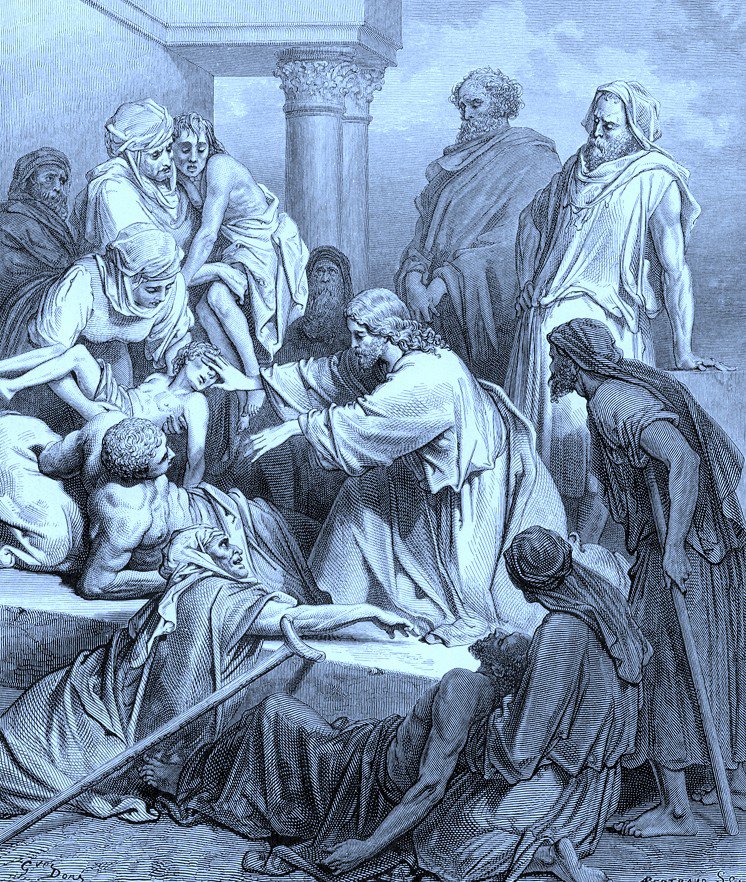
 I, the preacher of this hour, beg to bear my little witness that the worst days I have ever had have turned out to be my best days, and when God has seemed most cruel to me he has then been most kind. If there is anything in this world for which I would bless him more than for anything else it is for pain and affliction. I am sure that in these things the richest, tenderest love has been manifested towards me. I pray you, dear friends, if you are at this time very low, and greatly distressed, encourage yourselves in the abundant faithfulness of the God who hides himself. Our Father’s wagons rumble most heavily when they are bringing us the richest freight of the bullion of his grace. Love letters from heaven are often sent in black-edged envelopes. The cloud that is black with horror is big with mercy. We may not ask for trouble, but if we were wise we should look upon it as the shadow of an unusually great blessing.

 The next big thing in the church is the Emergent Movement/Conversation. Fronted by the likes of Brian Mclaren, Rob Bell and Doug Pagitt, the EM offers a new paradigm for doing church. Gone are denominational distinctions, doctrinal differences and deep discernment. These are replaced by feelings, experiences and encounters with "spiritual reality." A growing force in the post-modern church, this new way of doing things is actually a regression into old heresies and doctrinal deviations. In the rush to be relevant many well-meaning evangelicals are getting caught up in the conversation. Yet we must be mindful of Paul's warning in 2 Timothy 4:3-4.

An Irishman moves into a tiny hamlet in County Kerry, and one thing you can be sure of in Ireland is this: if there is a town anywhere in Ireland, there is bound to be a pub. So this fellow walks into the pub and promptly orders three beers. The bartender raises his eyebrows because even for an Irishman three beers at one time is a lot. Nevertheless, the bartender serves the man three beers, which he drinks quietly at a table, alone.
An hour later, the man has finished the three beers and orders three more.
This happens yet again. The next evening the man again orders and drinks three beers at a time, several times. This goes on night after night for a week, and soon the entire town is whispering about the Man Who Orders Three Beers. Finally, curiosity got the best of them, so the bartender broaches the subject on behalf of the town. "I don't mean to pry, but folks around here are wondering why you always order three beers?"
"Tis odd, isn't it?" the man replies, "You see, I have two brothers, and one went to America, and the other to Australia. We promised each other that we would always order an extra two beers whenever we drank as a way of keeping up the family bond."
The bartender and the whole town was pleased with this answer, and soon the Man Who Orders Three Beers became a local celebrity and source of pride to the hamlet, even to the extent that out-of-towners would come to watch him drink.
Then, one day, the man comes in and orders only two beers. The bartender pours them with a heavy heart. This continues for the rest of the evening: he orders only two beers, and finally the bartender says to the man, "All of us want to offer condolences to you for the death of your brother. You know -- the two beers and all..."
The man ponders this for a moment, then replies, "Well, now. I appreciate your sympathy, but you'll be happy to hear that my two brothers are alive and well. The one less beer is for me. You see, it's just that I gave up drinking for Lent."

