
The first in a four part series looking at the "my disciples" passages spoken by Jesus. In this message from Luke 14:25-33, we consider the c.o.s.t. of discipleship in terms of commitment, obedience, sacrifice and trust.
MP3 File
 God in His providence and in grace,
 John Buckeridge over at Christianity offers some interesting thoughts on whether its time for evangelicals to come up with a different identification for themselves.
"I’m an evangelical – but sometimes I’m reluctant to own up. I’m not alone – in a survey conducted for Premier Radio and the Evangelical Alliance 87% of the sample describe themselves as evangelical but only 59% reveal their ‘evangelical’ identity to others (News page 8). Not that we’re ashamed of the gospel of the Lord Jesus or being identified as Christians, it’s just the ‘evangelical’ tag that we sometimes struggle with.What Buckeridge says is sadly true, not only in the UK but here in the USA. Regardless of the intentions of the parties noted above, the evangelical brand, if you will, has undergone a marked change in the last few decades. Theology has been upstaged by political agendas and the cause of Christ is often the loser.
Half a century ago words like ‘gay’, ‘ecstasy’ and ‘wicked’ meant something very different than they do today. In the past ‘evangelical’ stood for four key values:
* a commitment to the authority and centrality of scripture,
* a call to personal faith and repentance,
* the centrality of Christ’s death as our substitute,
* putting faith into action through evangelism and social action.
Now to the unchurched and people of other faiths – evangelical is increasingly shorthand for: right-wing US politics, an arrogant loud mouth who refuses to listen to other people’s opinions, men in grey suits who attempt to crowbar authorised version scripture verses into every situation, or ‘happy-clappy’ simpletons who gullibly swallow whatever their tub thumping minister tells them to believe. Large parts of the British media seem happy to paint evangelicals into that stereotype. Today in the UK ‘evangelical’ is often linked with the ultimate 21st century swearword ‘fundamentalist’. The result is the name ‘evangelical’ which years ago, may have smelt of roses – now has the aroma of the manure that fertilises the bush.
What to do? I’ve spoken to Joel Edwards who heads up Evangelical Alliance, a man I really respect and admire. He argues that we need to rehabilitate the word, that ‘evangelical’ is too rich and precious a word to drop. But I worry that the tide has gone out on the ‘e’ word. I still stand by the historic values that evangelicalism was built on, I’m not going soft on the four ‘e’ principles listed earlier. But I’m tired of being tarred with the identities of men with megaphones who shout ‘hell’, ‘wrath’ and ‘damnation’ at passers-by and fail to say, ‘love’, ‘grace’ or ‘forgiveness’. I’m tired of being tarred with the identities of the ‘anti-everything’ brigade – who angrily list the things they are against and claim to speak for ‘evangelicals’, but actually have a tiny support base. And I’m tired of being tarred with US right wing foreign policy.
People within might understand, but what about those outside the church? Isn’t it time to choose a new word that sums up our e-identity and commitment to following Jesus but puts distance between us and the damaging negatives?"
 Got this from Stay Free! Daily...


 The following was a question from a real job application:


 Have you not quoted a great many times certain lines about “That undiscovered country from whose borne no traveler returns”? It is not so. There was once a traveler who said that “I go to prepare a place for you, and if I go away I will come again and receive you unto myself; that where I am there ye may be also.” He said, “A little time and ye shall see me, and again a little time and ye shall not see me, and because I go to the Father.” Do you not remember these words of his? Our divine Lord went to the undiscovered country, and he returned. He said that at the third day he would be back again, and he was true to his word. There is no doubt that there is another state for human life, for Jesus has been in it, and has come back from it. We have no doubt as to a future existence, for Jesus existed after death. We have no doubt as to a paradise of future bliss, for Jesus went to it and returned. Though he has left us again, yet that coming back to tarry with us forty days has given us a sure that he will return a second time when the hour is due, and then pledge with us for a thousand years, and reign on earth amongst his ancients gloriously. His return from among the dead is a pledge to us of existence after death, and we rejoice in it.
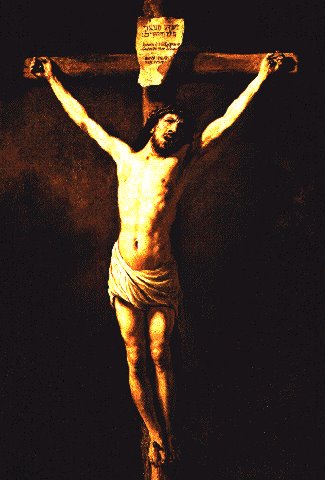 "Father forgive them, for they know not what they do" (Luke 23:32-34)
 Maundy Thursday meditation from Luke 22:14-30 focusing on the promise Jesus gives that those who continue with Him will dine at His table in the Kingdom to come.
 Worldnet Daily reports this:
A media company that produced a best-selling documentary asserting that Jesus Christ never existed today launches its "War on Easter," encouraging volunteer atheists to plant copies of the film "The God Who Wasn't There" in churches across the United States.Paul understand the arguments of people like the above: He addresses them in 1 Corinthians 15:12-19
Dubbing the effort "Operation Easter Sanity," Brian Flemming, a self-described "former Christian fundamentalist" and president of Beyond Belief Media, hopes to covertly place 666 copies of the documentary in churches by Easter Sunday, April 16. The number 666 is the biblical mark of "The Beast," which also is the name of another film by Flemming set for a 06-06-06 release.
"People go to churches to hide from the truth," Flemming said in a statement. "At no time is this more apparent than Easter, when Christians get together to convince each other that a man died, stayed dead three days, rose from the dead and then flew into the air above the clouds.
"Our nonviolent campaign sends the message that nowhere in the country is safe from the truth. Wherever Christian leaders are indoctrinating children with 2,000-year-old fairy tales, the truth may just find its way there."
Continued the former Christian: "Our 'War on Easter' is of course completely without violence of any kind. Christians believe that beating a man to a pulp and nailing him to a cross somehow solves all the world's problems. Beyond Belief Media does not."

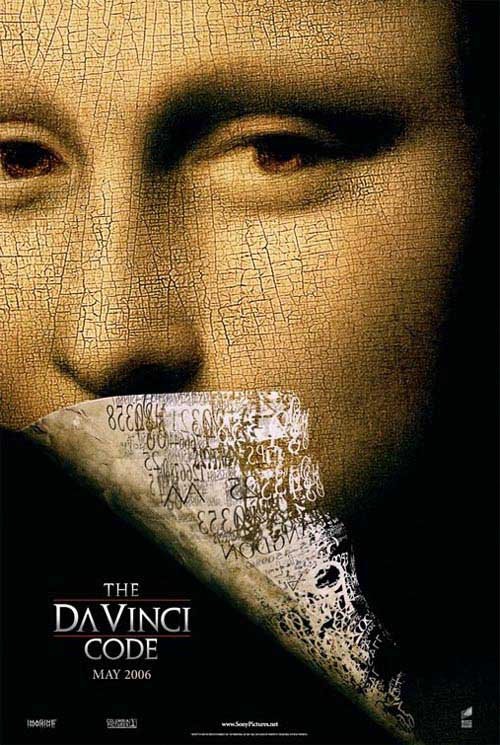 Justin over at Between Two Worlds shares an e-mail with a great suggestion on how we can respond to the Da Vinci Code movie release. Sounds like a great idea to me...
 "When we think of Jesus on the cross, we often think only of the incredible physical torture His body must have borne. Yet wouldn't His soul have been even more tortured? His infinite love rejected. On the edge of a chasm between Himself and His Father. Looking down on His weeping mother and heartbroken friends - all for the sake of the people who were crucifying Him. When those whose own souls have been in the deep, black valley of unrelieved anguish look to the man on the cross for peace, they understand what others cannot - there were probably moments when Jesus welcomed the distraction of the nails pounded into His hands."

