Thursday, March 31, 2005

President Urges Country to 'Build a Culture of Life'


1963-2005


Thursday, March 31, 2005 President Bush said Thursday that he joins the millions of Americans saddened by the death of Terri Schiavo and urged the country to honor her memory by working to "build a culture of life."

"The essence of civilization is that the strong have a duty to protect the weak," Bush said. "In cases where there are serious doubts and questions, the presumption should be in favor of life."

“The King will reply,
‘I tell you the truth, whatever you did for one of the least of these, you did for me.’"
Matthew 25:40


Wednesday, March 30, 2005

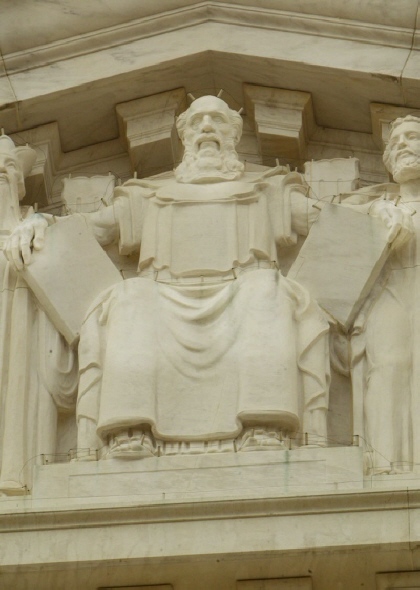
God in the Temples of Government Poster


Moses on the rear facade of the U.S. Supreme Court Posted by Hello

This is just one of the great images to be found on this poster.
This four-color poster measures 3' wide by 2' high and features full-color photos of 13 religious sculptures and artworks that can presently be found in government buildings such as the Library of Congress, the U.S. Supreme Court, the U.S. Capitol, and the Ronald Reagan Building.

How important it is that we remind oursleves and our children of the Judeo-Chrisian heritage of this great nation.

Monday, March 28, 2005

Huge UK Church Survey says Pews Emptying Because Christianity no Longer Preached

Public wants church’s to cease being ‘silent’ and ‘lukewarm’ in face of moral collapse


LONDON, March 7, 2005 (LifeSiteNews.com) - With Christian moral values and legal protections under assault on all sides, it is commonly said that the reason pews are emptying is that traditional religion is not relevant. A new survey of thousands of churchgoers in the UK says the opposite however, and indicates that the emptying of the churches has been caused mainly by preaching and pastoral care that has been emptied of moral or doctrinal Christian content. The survey addressed questions about why church attendance was falling so dramatically in the UK but growing elsewhere, even though two-thirds of the British population believes in God.

The results of the year-long survey of 14,000 UK residents by the interdenominational Ecumenical Research Committee has been called ‘surprising’ by mainstream secular and Christian media. The overwhelming response is to call on churches “to robustly defend moral values with conviction and courage and cease being ‘silent’ and ‘lukewarm’ in the face of moral and social collapse.”

In an introduction, Lord Bromley Betchworth said “Those who spoke, did so with one voice…an alarming indication that there are multitudes of people across Britain and Ireland who feel that their views are not being heard or represented.” The vast majority of the people in Britain and Ireland, he says, are still morally conservative. “They are appalled that moral values and treasured beliefs are being stood on their head and want churches to play a leading role in standing up for these things.”

The survey itself asked four simple questions and avoided ‘tick-box’ responses in favour of written letters. The huge response was a surprise in itself and reflected a growing frustration and anger felt by many ordinary people about the direction of churches and society in general.

Responses displayed a widespread sense of frustration and anger at what was happening to the churches in Britain and Ireland. Many gave variations on the response, “Why hasn’t a survey like this been done before, so we can speak?” “At last, someone is listening, thank you so much.” “Thank you for the chance to express our beliefs without fear.”

Several ‘traditionalist’ Anglican clerics said that they had “to keep their own views to themselves in case their bishop, who held opposing beliefs, would remove them from their diocese.” Many Catholics in North America have written that a similar situation exists there in which the churches are controlled exclusively by bishops and lay administrators who brook no Christian opposition to their officially sanctioned left-liberal dissent from the faith.

91% of responses followed a uniform theme that the decline in traditional Christian moral and doctrinal teaching has caused the outflux of congregations. They listed the lack of apologetics, the reasoned defence and explanation of Christian doctrine, as one of the main reasons for the collapse. “It’s a myth today that the people of this country have rejected Christianity; they simply haven’t been told enough about it to either accept or reject it,” wrote one respondent.

Thousands of letters also cited the lack of emphasis on the holiness of God and the need for personal moral conversion. The desire for teaching on holiness, was prevalent and has been influenced, said the authors, by Mel Gibson’s film, the Passion of the Christ. Many responded that the churches now teach easy forgiveness; an attitude that ‘God loves me anyway,’ and that there is no need to attend church or live a morally demanding Christian life.

The overwhelming majority of respondents were vehemently opposed to ordaining homosexuals and blamed the churches for the rise in pedophilia scandals because of the prevalence of homosexuals in the clergy.

Some celibate homosexuals wrote saying that the prevalence of support for homosexuality in the churches is undermining their efforts to live chastely. One young man wrote, “For sections of the Church to suddenly say that my struggle (to remain chaste)…was for nothing and that it would have been OK to have given in, would be to deny my personal cross for Christ and mock the faithfulness I have shown Him.”

2000 letters asked for a return to traditional liturgy and pointed out that attempts to attract younger people with jazzed-up offerings had failed and had alienated older parishioners. Over 450 said they drove vast distances to attend a traditional liturgical celebration. 1500 letters complained that the modern liturgies ‘bordered on entertainment rather than worship.”

The survey has supported what Christians themselves have been saying for decades, that there is little point in attending a church whose message is no different from that of the materialistic secular world.

———————————————————————————————————————————————

I would imagine that a similar survey in the US would echo the sentiments of this one. Few would dispute that the Church is in crisis, but those in current leadership and influence are blind to evidence and deaf to the voices from in the pews and without. What is needed is not a dumbing down of the Gospel, not a movement to be more like the world in our approach, but inded quite the opposite.

We must learn again the lesson of Genesis 26:18: “Isaac dug again the wells of water which had been dug in the days of his father Abraham, for the Philistines had stopped them up after the death of Abraham; and he gave them the same names which his father had given them.”

Its time again for true “Israelites” to stand up to the “Philistines” and drive them out of the land.

Saturday, March 26, 2005

A Great Easter Story

A bit long, but well worth it...Happy Easter! - Scott


He's Alive!

by Kathryn O. Umbarger

"Maybe you’d like to post this for me, Sarah?" Mrs. Tennyson said as she held out the list of cast members for the Easter play.

Sarah bounced so high on her toes, I thought she’d tip over as she grabbed the paper and buried her face in it.

"Yes!" she squealed. "Yes, yes, yes! Mary Magdalene. Thank you, Mrs. Tennyson."

But Mrs. Tennyson was gone.

"So?" we begged. "What about us?"

The Easter play was a very big deal. Besides one final hymn, it took up the entire sunrise service. So there we were—Courtney, Jenna, Sarah, and me, Becky—four sixth-grade girls waiting for Mrs. Tennyson to announce the cast.

Sarah held the list close and scanned it again. "Becky . . . Becky and Jenna—angels at the tomb. Oh, Philip is Jesus. Roman guards: Russell, Kevin and Adam. Courtney, here you are—in the choir of disciples and citizens, along with Carol, Alicia, Paul, Kyle and . . . Marianthi Mekas! Oh, no!" She groaned. "Not Mekas Freakas again!"

I cringed, hoping nobody heard. Marianthi was Mrs. Tennyson’s 10-year-old granddaughter. Mrs. Tennyson was not only the church pianist and play director, but she was also my neighbor. Marianthi visited often. My mother explained that Marianthi was one of those special children who would always be a child.

Sarah clenched her teeth. "If that girl messes me up—"

"Hey," Courtney interrupted, "nothing could be as bad as the Christmas pageant."

She took the list from Sarah and tacked it on the bulletin board.

"Poor Courtney," Jenna sympathized. "You finally got to be Mary, and your baby brother was the perfect Jesus. Then old, floppy-eared sheep Marianthi—"

"Almost grabbed him right out of the manger!" Courtney finished, looking straight at me. "You were her shepherd. You were supposed to hang onto her!"

I looked at the floor. I thought about how sweet Marianthi was. She was never mean, but all I said was: "She only wanted to touch him. She thought he really was the Baby Jesus. Marianthi is just different."

"She causes problems," Sarah insisted. "Like shouting, ‘What about the cow?’ all through the little kids’ song."

My face burned as Jenna added, "They better have a grown-up in charge of her this time. How come her mother doesn’t help?"

I’d heard my mom and Mrs. Tennyson talking lots of times and knew that was a real sad spot for Mrs. Tennyson. Marianthi’s mom didn’t go to church anymore, but I didn’t say it.

Getting Set

We built the sets in the Tennysons’ garage. Jenna and I worked on a giant piece of cardboard for the tomb. Mr. Tennyson cut huge tabs around it. We bent them back and taped them for the cave’s sides, and hung a black cloth at the entrance to hide Jenna and me until our scene.

Mr. Tennyson designed a handle for Jenna to pull to roll the stone back and forth across the entrance. My job was to remove the cloth and switch on a light to show the radiance from the angels. Philip’s dad painted the cardboard so it looked 3-D.

The boys repaired the cross from last year. It had a step for Philip to stand on. Then they practiced putting Philip on it, swinging it upright on its industrial-size hinge and getting him down again.

During rehearsals, Sarah, Jenna and I saw little of the choir, since our scene was the resurrection and they took part in the court and crucifixion scenes. But Sarah didn’t stop worrying about Marianthi.

So when Marianthi missed final dress rehearsal Saturday afternoon, Sarah was delighted. "If she’s sick today, she won’t be able to come tomorrow."

I wanted to say it was sad because Marianthi loved to sing, but I didn’t. Sarah strutted off, pretending to weep as she recited, "Who will roll away the stone for us?"

Surprise Visitor

A chilly rain fell Easter morning, but the church was a flurry of costumes, last-minute instructions and people asking, "Where’s Mrs. Tennyson?"

My mom rounded up the choir kids to warm up their voices. Philip’s dad checked the microphones, speakers and props.

Jenna’s mom stationed two kids at the doors with programs, and Philip and Russell got the other guards and Pilate into their places. Kevin’s mom closed her cell phone, saying, "There’s no answer, so Mrs. Tennyson must be on the way."

Jenna and I concealed ourselves in the tomb and waited. I could see the left half of the room and most of the stage.

Pastor Jim waited, restless like everybody else, craning his neck as if looking at the door would make Mrs. Tennyson appear.

At last the back doors swung wide and in strode Mrs. Tennyson, followed by—I almost bonked my head on the tomb—Marianthi’s mom! And Marianthi.

I wondered how Sarah would react, then remembered she was in the side room, waiting her cue to enter with JoHelen, the other Mary. Sarah wouldn’t even know Marianthi was here.

Marianthi took her place with the disciples, without her costume, and the play began.

Where’s Jesus?

Pilate read his lines perfectly; the citizens sang an angry-sounding "Crucify Him" song; the disciples sang a sad song; and Jesus was led to the cross.

The soldiers bound him to the cross and lifted it up.

Jesus said his last words, "It is finished." As lights dimmed and Jesus’ head drooped, nobody moved. I felt tears in my eyes. I’d never been so close to it all.

When the soldiers lowered the cross, a single low moan arose in the audience, a sad sound like I’d never heard before.

Russell whispered nervously, "Hurry up and untie him, Kevin."

Philip climbed off the cross, and they pretended to carry him to the tomb. I pulled off the curtain, Philip crawled through and Jenna rolled the stone shut. Philip escaped out the back as the narrator said, "The Sabbath passed, and it was the first day of the week."

The forlorn cry rose, sadder. The lights came up like the dawn, and I saw who it was. Marianthi had risen to her feet. Her hands covered her mouth. Her face was stricken.

I barely breathed. "Jenna, Marianthi thinks it’s real."

Jenna whispered back, "Here come Sarah and JoHelen. Uh, oh. Sarah just saw her. She stopped. JoHelen’s poking her."

After a long pause, Sarah began, "Who will roll . . . ?"

But her line was lost in the rolling boom of the bass drum as the sound of the earthquake came too soon.

Terrified by the noise, Marianthi stumbled forward onto the stage, where she stood, bewildered and sobbing.

"Where is Jesus?" she cried. She went to the cross and stroked it. Her voice squeaked in agony, "Where is my friend Jesus?"

She came toward the tomb. I couldn’t see her now, but the whole cave shook as she tried to pry away the cardboard stone.

Angels’ Answer

Jenna realized that she had missed her cue to roll away the stone and cranked the handle as the drum boomed again. Marianthi screamed and dropped to the floor, covering her head with her arms.

"Becky! The light!" Jenna commanded. I switched it on. Light shown out of the tomb onto Marianthi.

I couldn’t stand her misery any longer. I walked out of the cave and knelt beside her. "Marianthi, it’s okay." She looked up, her eyes swollen and red. She didn’t recognize me.

"Beautiful angel," she pleaded. "What did they do to my friend Jesus?"

"They killed Him on the cross," I explained as gently as I could. "And they put Him in the tomb. But, Marianthi, He’s not dead anymore."

Jenna came out, too. On our knees, we showed her the tomb. Jenna put her hand on Marianthi’s shoulder and went right into her lines. "Don’t be afraid. We know you’re looking for Jesus who was crucified."

"He is not here," I continued. "For He has risen, as He said."

"Go now, quickly, and tell everyone," Jenna added.

Marianthi was unsure. "He’s not dead anymore?"

I shook my head. "He’s alive."

Marianthi looked all around. I was suddenly aware of the microphone, the speakers and the congregation watching us. Even the babies were still.

Marianthi’s small voice sounded clearly through the sanctuary. "Then where is He?"

"Here," I pointed. "In your heart."

"In my heart." Marianthi smiled through her tears. Then she scrambled to her feet, threw up her hands and whooped, "He’s alive!"

She danced down the aisle to her mother.

The congregation erupted in applause. Mrs. Tennyson’s fingers ran all over the keyboard as we sang the final hymn.

I caught Sarah’s eye and she gave me a double thumbs-up. Then she and JoHelen came on stage, followed by Philip and the other boys, the stage crew and choir to take our final bow.


Wednesday, March 23, 2005

More Wisdom From NeoPuritan

My dear friend and colleague has once again hit a homerun...

Who Moved My Gospel?

One of the best-selling business books is called "Who Moved My Cheese?" It's about coping with change. Change causes anxiety, because it threatens to replace what is familiar and comforting, with the new and the different. Conservatives by nature dislike change, feeling that any longstanding institution is a precious thing, usually erected incrementally and at great cost. The conservative is ever mindful of the truism that it is always easier to destroy something than to create it in the first place. This impulse to preserve what is meaningful, established, or traditional can be a blessing to human civilization, as in the case of the Christian Gospel, or it can be disastrous when the tradition being preserved is demonic, as in communism.

The opposite impulse, which is a delight in change and a tearing-down of what is familiar or ancient, and which is labelled "liberalism" by the established order, can likewise be a creative force (as in the Renaissance) or a destructive even suicidal influence (as in the French Revolution). But there are areas of culture, in the arts and in philosophy, where change is always a diminishment, a movement away from the Platonic ideals of the good, the true, and the beautiful. Hanging a toilet on a wall is not art, nor is redefining evil as good an improvement in morality.

This is to say that there are some "ideals" which transcend time, culture, opinion, or development.

This applies to the Reformed Church in the matter of creedal and confessional subscription. When a man is ordained into the ministry, he is asked to reply in the affirmative:
1. "Do you believe the books of the Old and New Testaments to be the Word of God and the perfect doctrine of salvation; rejecting all doctrines contrary thereto?"
2. "Will you proclaim the gospel of our Lord and Savior Jesus Christ; will you from the Word of God instruct, admonish, comfort, and reprove, according to everyone's need; and uphold the witness of holy Scripture against all schisms and heresies?"
One is also required to support the Constitution of the church, which includes the Three Forms of Unity (Heidelberg Catechism, Belgic Confession, and Canons of Dordt).

That many men (and contrary to Scripture, women) take these sacred oaths with mental reservations, outright deceit, or with the intention of undermining the very doctrines they have sworn to uphold, is obvious. The creeds are considered "quaint." The confessions, outdated. The gospel must be moved aside to make way for new wisdom from the "Holy Spirit" or further accommodation to worldliness. So I ask, "Who moved my gospel?"

The answer? Those who have taken positions in the church and in the seminaries who while making solemn oaths before God, while living well off the tithes of God's peoples, and while publicly demeaning the teaching of the Bible, nonetheless consider themselves both Christian and faithful shepherds of God's people.

"But even if we or an angel from heaven should preach to you a gospel contrary to the one we preached to you, let him be accursed" (Gal 1:8). "Woe to the shepherds who destroy and scatter the sheep of my pasture, declares the Lord" (Jer 23:1).

Listen to J. Gresham Machen, words written nearly eighty years ago, but sadly relevant: "the Church of today has been unfaithful to her Lord by admitting great companies of non-Christian persons, not only into her membership, but into her teaching agencies" ("Christianity and Liberalism," p.159). "Christianity is being attacked from within by a movement which is anti-Christian to the core" (Ibid. p.178).

I believe it is time to make a division in the RCA. Let the deceivers and oath-breakers go their own way. They will find happy homes in the UCC and other apostate "churches." Let the conservative Reformed take back the church, institute strict subscription, and boot out those who teach and preach other "gospels." Why should the orthodox leave...we were here first.

If you aren't reading his blog Reformed Revival, you are missing a great analysis of not only the decline in the Reformed Church in America, but many other mainline churches as well.

Friday, March 18, 2005

A Bright Moment in the RCA

150th Anniversary Celebration

Fulton Street Noontime Prayer Meeting

September 23, 2007

"Pray without ceasing" (1 Thessalonians 5:17, KJV)

Background
The Fulton Street prayer revival (the spark for the Second Great Awakening in the United States) began September 23, 1857, in the consistory room of the North Dutch Reformed Church, just a few blocks from where the World Trade Centers once stood. It grew to include Christians from a variety of denominational backgrounds, and spread from one local church throughout the city and nation and into the world.

Jeremiah Calvin Lanphier was hired by the consistory of Marble Collegiate Church as a lay missionary in connection with the North Dutch Reformed Church. From his personal observations and experience, he felt it would be profitable to challenge "men engaged in active business to devote a portion of the time usually given to rest and refreshment at mid-day to devotional purposes." So Wednesday, from noon to one o' clock, was set aside in the consistory building on Fulton Street to give "merchants, mechanics, clerks, strangers and businessmen generally an opportunity to stop and call upon God amid the daily perplexities incident to their respective avocations."

The first meeting was held on the 23rd of September, 1857. The first person to join Lanphier was a half-hour late; several others came even later. Five denominations were represented. "Prayer and praise were offered." The following week twenty attended. The third week, there were forty. By the fourth week, they decided to hold a meeting every workday. Within months, meetings were being held throughout the city; the movement soon spread to other U.S. cities from coast to coast.

The agenda was simple: "the salvation of the soul." They would pray for the "souls" of family members, neighbors, and coworkers—by name. Others would join in praying in agreement. They prayed for salvation and praised God when it happened.

The absence of "oratory" (i.e., a speaker) and "argument" (theological discussion) made these meetings both unique and attractive. Four items distinguished these prayer meetings from others:

1) Spontaneity. With the exception of a patterned beginning, the meetings general conducted themselves. Almost everyone participated.

2) Their interdenominational nature. Leaders came from every evangelical faith: Baptists, Brethren, Congregationalists, Episcopalians, Friends, Lutherans, Methodists, Presbyterians, and Reformed. Issues and items which distinguished them were not discussed.

3) Promptness. The meeting started promptly at noon and closed promptly at one. Prayers were held accountable to the five-minute rule.

4) Their focus on prayer. The "agenda" was prayer—prayer for salvation and for the Holy Spirit's empowerment. No "business" was conducted.

Historians estimate that as many as one million people may have come into a personal relationship with Jesus Christ as a result of this prayer.

The Prayer Meeting
The character and pattern of the Fulton Street prayer meeting was followed as it spread across the United States and beyond. Leaders were given a "bill of direction" and required to observe it strictly:

Please observe the following rules:
Be prompt, commencing precisely at twelve o'clock.
The leader is not expected to exceed ten minutes in opening the meeting.
1st. Open the meeting by reading and singing three to five verses of a hymn.
2nd. Prayer.
3rd. Read a portion of Scripture.
4th. Say the meeting is now open for prayers and exhortations, observing particularly the rules overhead, inviting the brethren from abroad to take part in the services.
5th. Read but one request at a time—requiring a prayer to follow—such prayer to have special reference to same.
6th. In case of any suggestion or proposition by any person, say this is simply a prayer-meeting, and that they are out of order, and call on some brother to pray.
7th. Give out the closing hymn five minutes before one o'clock. Request the benediction from a clergyman, if one be present.

A placard was hung on the wall in a prominent place, commanding the attention of the whole meeting:

Brethren are earnestly requested to adhere to the five-minute rule.
Prayers and exhortations not to exceed five minutes in order to give all an opportunity.
Not more than two consecutive prayers or exhortations.
No controverted points discussed.

Invitation
The Dutch Church is the mother denomination of the present-day Reformed Church in America and the Christian Reformed Church in North America. The RCA and the CRCNA have mutually endorsed a request to have their denominations celebrate the 150th anniversary of the inception of the Fulton Street Noontime Prayer Meeting on Sunday, September 23, 2007. Since this noontime prayer meeting was from the very beginning a multi-denominational gathering, the RCA and CRCNA extend an invitation to the Denominational Prayer Leaders Network (DPLN) and its members to share in this celebration of what God has done through prayer, in anticipation that He will continue to bring revival.

Request
That the Denominational Prayer Leaders Network endorse the September 23, 2007, celebration of the 150th anniversary of the Fulton Street Noontime Prayer Meeting and encourage its member denominations to participate in ways that promote prayer and revival through their denomination and congregations. (DPLN, approved January 25, 2005)

Vision

  • That churches, communities, and cities will use this commemoration as an opportunity to gather across denominational lines to pray together,
  • That churches and communities will encourage businessmen and women to set aside one noontime (lunch hour) each week to pray together.
  • That churches in business districts will open their doors for multi-denominational noontime prayer gatherings.
  • That these prayer groups will prioritize prayers for the lost, for the presence of God, and for the empowering of the Holy Spirit.
  • That major gatherings for prayer and celebration will be held in metropolitan areas.
  • That people will pray that God will use this anniversary to ignite the fire of revival.

Plan
Over the course of 2005 and 2006, Jonathan Brownson, minister for prayer in the Reformed Church in America, and Douglas Kamstra, prayer mobilizer for the Christian Reformed Church, will:

  • Encourage people, churches, and denominations to pray for this celebration—that God will anoint it by his Spirit and use it to bring revival.
  • Provide guides for setting up a noontime prayer meeting and training leaders, prayer guides for a noontime prayer meeting, and sample worship formats for the September 2007 anniversary. (Masters will be made available for distribution.)
  • Provide reproducible promotional materials to denominational and other ministry leaders.
  • Recruit additional prayer-ministry partners who will endorse this vision and encourage their members' participation. The goal is to make this a national, multi-denominational, multiethnic celebration of God.

During the 2006-2007 church year, we hope denominations and churches will initiate interdenominational noontime prayer meetings in their area through their businessmen and women.

Dr. Jonathan Brownson
Reformed Church in America
101 East 13th Street
Holland, MI 49423
(616) 392-8555, ext. 182

Dr. Douglas Kamstra
Christian Reformed Church in North America
2850 Kalamazoo Ave. SE
Grand Rapids, MI 49560
(616) 246-0762

"About noon the following day as they were on their journey and approaching the city, Peter went up on the roof to pray" (Acts 10:9, NIV).

"About noon, O king, as I [Paul] was on the road, I saw a light from heaven, brighter than the sun, blazing around me and my companions" (Acts 26:13, NIV).

References
Chambers, Talbot and Dutch Sheets. The New York City Noon Prayer Meeting. Wagner Publications, 2002 (originally published in 1858).

Chambers, Talbot. "The Prayers of a Generation: A Discourse Delivered in the Collegiate Church...September 23, 1887, being the Thirtieth Anniversary of the Daily Noon Prayer-Meeting."

Bakke, Robert. The Power of Extraordinary Prayer. Crossway Books, 2000.

Prime, Samuel. The Power of Prayer, revised edition. Banner of Truth, 1998.

Conant, William C. Narratives of Remarkable Conversions and Revival Incidents: Including a Review of Revivals...An Account of the Rise and Progress of the Great Awakening of 1857-8. Derby and Jackson, 1858.

Sacks, Cheryl. The Prayer-Saturated Church: A Comprehensive Handbook for Prayer Leaders. NavPress, 2004. 193-194.

Copyright © 2004 Reformed Church in America.

Sunday, March 13, 2005

More on Ex-Korn Guitarist Brian "Head" Welch

A few weeks ago one of the founding members of the rock band Korn announced his decision to quit the band after dedicating his life to Jesus Christ. The following links continue the story.

http://www.mtv.com/news/articles/1497484/20050225/story.jhtml
http://www.mtv.com/news/articles/1497529/02282005/korn.jhtml
http://www.mtv.com/news/articles/1497749/03032005/korn.jhtml
http://www.mtv.com/news/articles/1498045/20050311/korn.jhtml?headlines=true

It is my prayer that Welch can keep up his commitment in what can be the equally dangerous realm of "Christian" celebrity. The lure of the old life with a shallow veneer of spirituality has shipwrecked many whose dramatic conversions have put them back in the limelight, they had hoped to escape.


Saturday, March 12, 2005

They're At It Again!

In the unending quest to be tolerant by showing intolerance...

Easter Bunny hunted by PC Police

Shopping malls neutralizing secular symbol of Christian holiday

The Easter bunny has hopped into the crosshairs of the PC police.

It's a rite of Spring in most suburban shopping malls for youngsters to participate in Easter egg hunts or pose for photos with the Easter Bunny with the same fervor they had for sitting on Santa's lap during the Christmas holiday season.

But in the name of "multiculturalism," malls are phasing out the secular symbol of the Christian holiday.

Taking stock of malls throughout Palm Beach County, Fla., the Palm Beach Post discovered the Easter festivities held last weekend and scheduled for this weekend are being supervised by Baxter the Bunny, Peter Rabbit, and Garden Bunny.

"The name just complemented The Gardens of the Palm Beaches," mall marketing director Jeannie Roberts told the paper in explanation of the third name.

Mall officials at Town Center in Boca Raton, Fla., admitted to caving in to concern over what could be perceived as religious promotion.

"Because we're such a multicultural community, it's good just to remain neutral," mall general manager Sam Hosen said, according to the paper.

Another mall manager expressed apprehension over her decision to stick to tradition, hosting an Easter egg hunt complete with a cotton-tailed Easter bunny.

"I suppose the name Easter Bunny is fairly unusual," Boynton Beach mall manager Andrea Horne said. "I know it's probably not the popular thing to call it."

Although Easter and the Easter Bunny have origins in the Anglo-Saxon pagan celebration of spring, over the centuries they became associated by Christians with the resurrection of Jesus.
© 2005 WorldNetDaily.com


When will we stand up and say enough is enough?

Friday, March 11, 2005

Spurgeon Says...

A church that does not exist to reclaim heathenism, to fight evil, to destroy error, to put down falsehood, a church that does not exist to take the side of the poor, to denounce injustice and to hold up righteousness, is a church that has
no right to be. Nor for yourself, O Church, do you exist, any more than Christ existed for Himself.


Wednesday, March 09, 2005


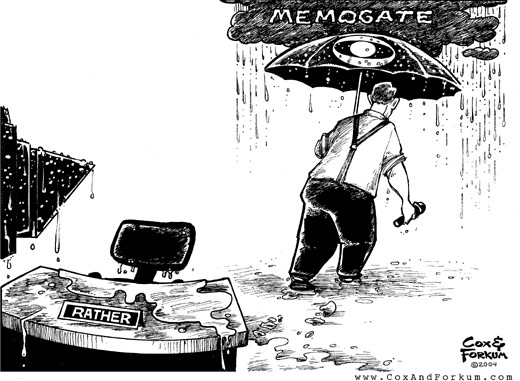
Another great cartoon from the folks at CoxAndForkum.com

Tuesday, March 08, 2005

What Kind of Christian Are You?

I just took this quiz "What Kind of Christian Are You?" on Beliefnet.com. Can't say I was surprised by the results...

You scored 355, on a scale of 0 to 400.

Here's how to interpret your score:
0 - 59 You are a Jesse Ventura Christian (a.k.a. a "Secularist" or non-Christian).
60 - 149 You are a Bishop Spong Christian (a.k.a. "Biblical Revisionist").
150 - 249 You are a Hillary Rodham Clinton Christian (a.k.a. "Left-Leaning Traditionalist").
250 - 329 You are a George Bush Sr. Christian (a.k.a. "Right-Leaning Traditionalist").
330 - 400 You are a Jerry Falwell Christian (a.k.a "Historicist").

You can click on a link under the category to find out more about yourself...

Jerry Falwell Christian
(a.k.a. "Historicist" or "Literalist")
You view the Bible as historically accurate and divinely inspired. You go to church every Sunday, with the Good Book in a Bible cover, and Wednesday night for Bible study. You've read at least one of the books in the apocalyptic "Left Behind" series, prefer your iced tea very sweet, and suspect Bill Clinton has murdered somebody somewhere in Arkansas. You're furious that people actually believe "The Da Vinci Code" and have bought a book debunking the novel. You wept uncontrollably all three times you went to see "The Passion of the Christ" and have ordered the DVD in bulk to give copies to friends. You may watch Eternal Word Television Network, and you adore Dr. Laura, Chuck Colson, James Dobson, and Rush Limbaugh. You enjoy some episodes of "Joan of Arcadia" but think it's not reverent enough--"Touched by an Angel" was better. If you're Catholic, you go to Latin Mass and weekly confession, though you don't have much to confess. You think homosexuals are sinful but try periodically to love them. You think the surrounding culture is so polluted that you shop at Christian bookstores, listen only to Christian radio and send your kids to Christian or parochial schools--or homeschool them. You give generously to your church and Christian charities. The Bible provides you not only a direct connection to God but a roadmap for how to lead your life.

While, I'm not a fan of the 'Left Behind" series and have never seen an episode of Joan of Arcardia, the rest is almost dead-on (in a tongue-in- cheek way).

So take the quiz and let me know what kind of Christian you are.

Pax,

Scott

Some Good News From Iraq

A hat-tip to 2 Slick for some things the MSM hasn't found time to report:

DID YOU KNOW THIS?

Did you know that 47 countries have re-established their embassies in Iraq?

Did you know that the Iraqi government employs 1.2 million Iraqi people?

Did you know that 3100 schools have been renovated, 364 schools are under rehabilitation, 263 schools are now under construction and 38 new schools have been built in Iraq?

Did you know that Iraq's higher educational structure consists of 20 Universities, 46 Institutes or colleges and 4 research centers?

Did you know that 25 Iraq students departed for the United States in January 2004 for the re-established Fulbright program?

Did you know that the Iraqi Navy is operational? They have 5- 100-foot patrol craft, 34 smaller vessels and a naval infantry regiment.

Did you know that Iraq's Air Force consists of three operational squadrons,9 reconnaissance and 3 US C-130 transport aircraft which operate day and night, and will soon add 16 UH-1 helicopters and 4 bell jet rangers?

Did you know that Iraq has a counter-terrorist unit and a Commando Battalion?

Did you know that the Iraqi Police Service has over 55,000 fully trained and equipped police officers?

Did you know that there are 5 Police Academies in Iraq that produce over 3500 new officers each 8 weeks?

Did you know there are more than 1100 building projects going on in Iraq?

They include 364 schools, 67 public clinics, 15 hospitals, 83 railroad stations, 22 oil facilities, 93 water facilities and 69 electrical facilities.

Did you know that 96% of Iraqi children under the age of 5 have received the first 2 series of polio vaccinations?

Did you know that 4.3 million Iraqi children were enrolled in primary school by mid October?

Did you know that there are 1,192,000 cell phone subscribers in Iraq and phone use has gone up 158%?

Did you know that Iraq has an independent media that consist of 75 radio stations, 180 newspapers and 10 television stations?

Did you know that the Baghdad Stock Exchange opened in June of 2004?

Did you know that 2 candidates in the Iraqi presidential election had a televised debate recently?

Wednesday, March 02, 2005

When The Church Affirms Homosexuality

This powerful article by Geoff Thomas considers the damage that can be wrought when the church advocates sin by affirming the gay lifestyle.

These "affirming" Christians are likened to: "the doctor who examines her patient and discovers life-threatening, but treatable, cancer. However, knowing that the patient cannot bear the thought of the painful treatment, she sends the man home with the good news that there is nothing wrong with him. Instead, the good doctor tells her patient that the symptoms of cancer are something quite natural that she should accept. In the same way, [The subject of the article] has had professing Christians tell him that homosexuality is natural, that he was born this way, and he should accept the way he is. They have said that his marriage was mistake; he should divorce his wife and affirm his gay identity, but he has heard countless stories of men and women who came out from affirming churches because they realized that they were not being who God wants them to be."

What will be the accountability of those who on the Last Day stand before the throne of God and must defend themselves against Paul's words in Romans 1:32...

"Although they know God's righteous decree that those who do such things deserve death, they not only continue to do these very things but also approve of those who practice them."

Tuesday, March 01, 2005

Has It Really Come To This?


New Maine House Bill Would Protect Fetuses Carrying the ‘Gay Gene’
By IPR
Feb 22, 2005, 19:02


AUGUSTA -– Rep. Brian Duprey (R-Hampden) has submitted a bill to the State Legislature to shield potentially homosexual fetuses from discrimination. LD 908, “An Act to Protect Homosexuals from Discrimination,” attempts to protect homosexuals from death because they might carry the gene that could lead to homosexuality. This bill as drafted would make it a crime to abort an unborn child if that child is determined to be carrying the “homosexual gene.” Duprey said that no such genetic marker has yet been discovered. But considering rapid advancements in genetic mapping research, he wants legislation in place should such a breakthrough occur. “If the homosexual gene is ever determined to exist,” he said, “I want to ensure that a woman could not abort an unborn child simply because that child is determined to be carrying this gene.” Duprey received the idea for this bill when listening to the Rush Limbaugh radio show. “I heard Rush saying that the day the ‘gay gene’ is determined to be real, that overnight gays would become pro-life,” Duprey said. “Most people would agree that to kill someone just because that person might be gay would constitute a hate crime,” said Duprey. “I have heard from women who told me that if they found out that they were carrying a child with the gay gene, then they would abort. I think this is wrong. Those unborn children should be protected.” Rep. Duprey is serving in his third term representing the towns of Hampden, Newburgh and Dixmont. He is the lead Republican on the Labor Committee.
© Copyright 2002, 2003, 2004, 2005 by Magic City Morning Star

I don't know whether to laugh or cry....

The Making of "Super Saints"

Matt Friedman has an interesting column on Agape Press that delves into the questions raised by Ron Sider in his newest book, The Scandal of the Evangelical Conscience.


"An old Christianity Today cartoon depicted a critic gently chastising the prophet Amos. "Nice sermon today ... but why can't you talk to us about what is right in Israel?"

When Ron Sider, in his new volume The Scandal of the Evangelical Conscience, addresses the unconscionable behavior of much of today's evangelical church, by the end of the first several chapters you have just about the same question for him: Is there anything good about the Church today? Sider thinks so.

But first to reiterate the tragedy. Sider quotes Peter E. Gillquist when he suggests that "All the evangelism in the world from a church that is not herself holy and righteous will not be worth a hill of beans in world-changing power." John G. Stackhouse, Jr., is not far behind in his sentiments: Many evangelicals, he states, are immersed in a Christianity that allows them to lie, cheat, beat their wives, neglect the poor, and live life any way they darned well want to with an attitude of I'm-cool-'cause-Jesus-loves-me-and-so-I-don't- owe-you-a-thing." Sider's book contains the statistics from the pollsters to prove this case. And it is not pretty.


But, thankfully, there is something right in Israel. There are what George Gallup, Jr. and Timothy Jones have dubbed "super-saints" who believe in the full authority of the Bible, pray and read the Bible daily, practice evangelism, perform works of compassion, are less prejudiced, are politically active, and who exercise a disproportionately positive impact in the lives of those around them.


And how to produce these disciples, or super-saints, in our churches today?
The surprising answer to some: convince them of a biblical worldview. People with this godly outlook on life are dramatically less likely to engage in sexual sin, far more likely to eschew various forms of sin, and more likely to take seriously spiritual habits, including serving the poor and sharing their faith. Explains Sider in a decided understatement, "Biblical orthodoxy does matter. One important way to end the scandal of contemporary Christian behavior is to work and pray fervently for the growth of orthodox theological belief in our churches."

Why I have not always agreed with Siders over the years, he is right on here. What is needed then is not less theology, but more. Not less doctrine, but more. Less entertainment and more Biblical preaching. Less, what can the Church do for me and more what can I do for others.

The key is a unified biblical worldview. Far too many Christians today have a buffet approach to the Christian life and practice. A little of this, some of that, I don't like that... They accept a hodge-podge of contradictory ideas and seem unable to recognize the inconsistency and danger of such an eclectic world-view.

As clergy, we have aided and abetted our congregations, by being more concerned about filling our pews than filling people's hearts and minds. We compromise the core of truth in order not to offend. We would rather entertain than educate. We say we are only giving the people what they want. But our God-ordained role is to give them what they need. Strong medicine is needed to cure this soul-sickness and we must not withhold the cure, just because the patient might not like the prescription.

We cannot change the world until we change ourselves.
"Therefore, I urge you, brothers, in view of God's mercy, to offer your bodies as living sacrifices, holy and pleasing to God –this is your spiritual act of worship. Do not conform any longer to the pattern of this world, but be transformed by the renewing of your mind. Then you will be able to test and approve what God's will is His good, pleasing and perfect will." (Romans 12:1,2)